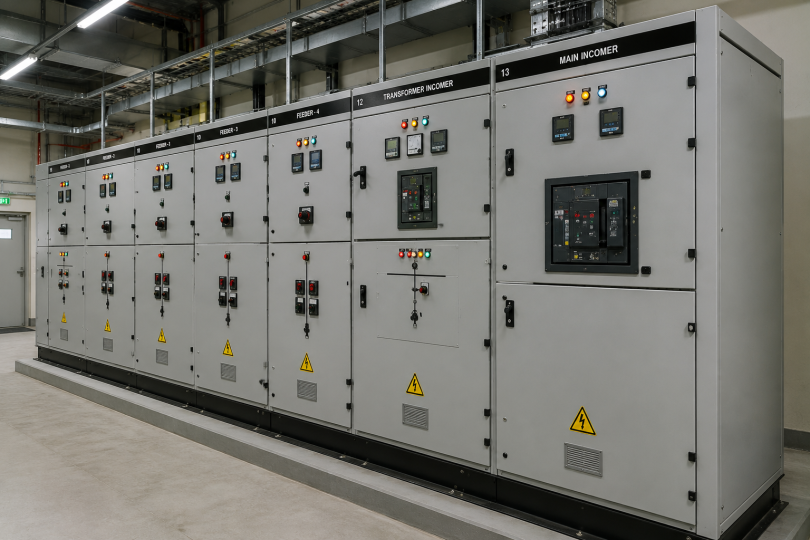

Electrical distribution systems need equipment that can control, protect, and isolate electrical circuits while keeping energized components separated from personnel and surrounding equipment. Metal enclosed switchgear is used for this purpose across industrial facilities, commercial buildings, utility installations, and infrastructure projects.
Its construction provides a protected enclosure around switching and protective components, helping electrical systems operate in an organized and controlled environment. The equipment can be configured for different voltage levels, ratings, fault duties, and installation requirements.
What Is Metal Enclosed Switchgear?
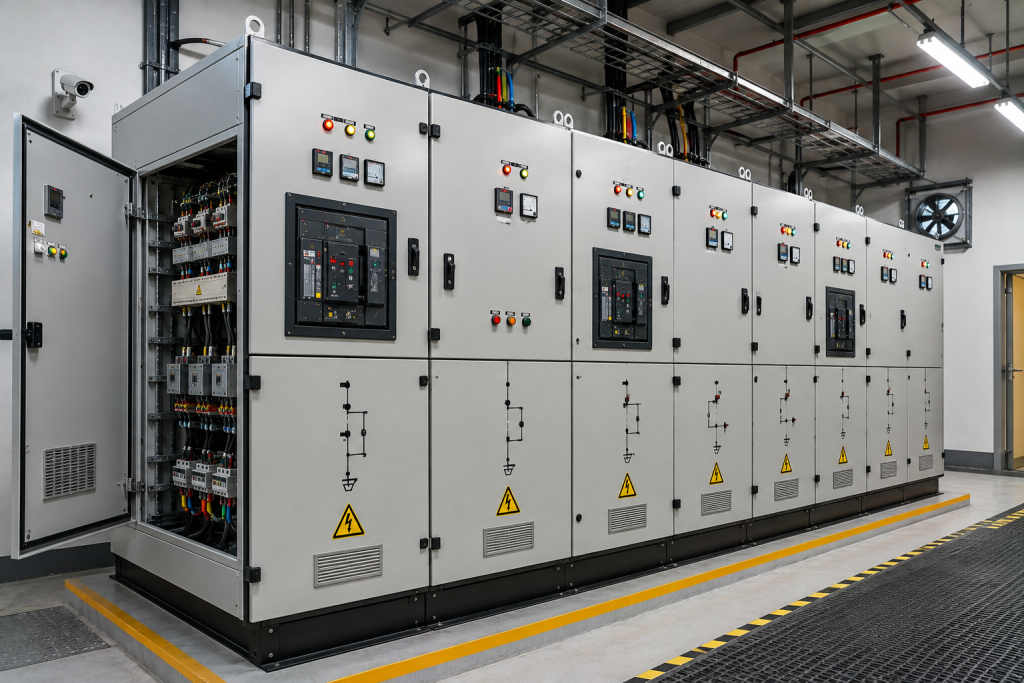
Metal enclosed switchgear is an electrical assembly in which switching, protection, busbars, and related components are housed inside a metal enclosure. Depending on the design, the assembly may include circuit breakers, disconnect switches, fuses, instrument transformers, protective relays, metering equipment, and control wiring.
The enclosure provides physical protection and helps establish separation between electrical components and the surrounding environment. It can also reduce the risk of accidental contact with energized parts.
The exact arrangement depends on the electrical system. Some installations use fixed-mounted equipment, while others incorporate withdrawable circuit breakers or separate compartments for different functions.
Main Components Found in a Switchgear Assembly
A typical switchgear lineup contains several components that work together to control and protect an electrical network.
Circuit Breakers
Circuit breakers interrupt current during abnormal conditions such as short circuits or overloads. Their interrupting capacity must match the prospective fault current at the installation point.
Busbars
Busbars provide a common conductive path for distributing electrical power between incoming sources, outgoing feeders, transformers, and other circuits. Their dimensions and insulation arrangements depend on the required current and voltage ratings.
Disconnecting Devices
Disconnect switches and isolators provide a means of separating sections of an electrical system for inspection or servicing. They are normally used with suitable interlocking arrangements to prevent unsafe operating sequences.
Protective Relays
Protective relays monitor electrical conditions and initiate circuit-breaker operation when faults or abnormal operating conditions are detected. Modern systems can monitor parameters such as current, voltage, frequency, and earth-fault conditions.
Instrument Transformers
Current transformers and voltage transformers provide scaled electrical signals for metering and protection equipment. Correct selection and installation are essential for accurate measurements and reliable protection.
How Switch Gear Systems Are Used
Different switch gear systems are designed around the voltage, current, fault level, operating environment, and configuration of the electrical network.
Industrial plants may use switchgear to control large motors, transformers, process equipment, and distribution feeders. Commercial facilities can use it for incoming utility supplies and internal distribution. Utility installations may require equipment capable of handling multiple feeders and maintaining service continuity during planned maintenance.
The enclosure configuration also depends on available space. Indoor equipment may have different environmental requirements from outdoor installations exposed to dust, moisture, temperature changes, or other site conditions.
Metal Enclosed Switchgear and Electrical Safety
Physical separation is one of the main reasons enclosed switchgear is selected for electrical distribution applications. The metal enclosure limits access to internal electrical components and provides a defined structure for installing switching and protection equipment.
Safety also depends on correct engineering and operating procedures. Interlocks, grounding arrangements, warning labels, suitable clearances, and correctly rated protective devices all contribute to safer operation.
Operators should follow the manufacturer’s instructions and the applicable electrical standards for installation, testing, operation, and servicing. Lockout and isolation procedures should also be followed before work is performed on equipment.
Metal Enclosed Switchgear Maintenance Requirements
Regular inspection helps identify developing problems before they affect system performance. Switchgear maintenance may include visual inspections, cleaning, mechanical checks, electrical testing, and examination of protective devices.
Technicians may inspect busbar connections for signs of overheating, check breaker mechanisms, examine insulation, verify grounding connections, and test protective relays. Thermal inspection can also help identify abnormal temperature rises at connections or other components.
The maintenance schedule should reflect equipment age, operating conditions, manufacturer recommendations, fault exposure, switching frequency, and the criticality of the electrical installation.
Medium Voltage Applications
Medium-voltage installations require careful consideration of insulation, switching performance, fault interruption, clearances, and environmental conditions. Equipment ratings must correspond with the operating voltage and expected fault conditions.
Medium voltage switchgear maintenance can involve circuit-breaker testing, insulation assessment, contact inspection, relay verification, mechanism checks, and examination of cable terminations. The precise maintenance program depends on the equipment design and site requirements.
Gas-insulated designs are another option for installations where space is limited or environmental conditions require a sealed arrangement. Medium voltage gas insulated switchgear uses insulating gas within designated compartments instead of relying entirely on air insulation. This construction can allow a more compact installation while providing controlled insulation conditions.
Choosing the Right Switchgear Configuration
Selecting the appropriate equipment begins with the electrical characteristics of the installation. Engineers generally consider:
- System voltage and frequency
- Continuous current rating
- Short-circuit withstand and interruption ratings
- Number of incoming and outgoing feeders
- Protection requirements
- Indoor or outdoor installation
- Available installation space
- Environmental conditions
- Maintenance access
- Future expansion requirements
The physical layout should provide adequate access for inspection, testing, cable termination, and component replacement. The arrangement of compartments and access doors should also correspond with the required operating and maintenance procedures.
Installation Considerations
Proper installation is necessary for reliable switchgear operation. The supporting structure must be suitable for the equipment weight, and the lineup should be correctly aligned and secured.
Cable connections require particular attention because poorly installed terminations can create excessive resistance and localized heating. Grounding conductors should be connected according to the electrical design, and all mechanical and electrical connections should be checked before energization.
Before the system is placed into service, commissioning tests can verify insulation condition, breaker operation, protection settings, control circuits, and other specified characteristics.
Why Proper Maintenance Matters
Electrical switchgear can remain in service for many years, but its condition can change because of mechanical wear, environmental exposure, repeated switching, heat, contamination, and electrical stress.
A planned inspection and testing program gives maintenance teams an opportunity to identify deterioration before it develops into equipment failure. Keeping accurate service records also helps establish trends and determine when individual components may require repair, adjustment, or replacement.
For critical installations, maintenance planning should consider the consequences of an unexpected shutdown. Equipment condition, spare-part availability, testing requirements, and access to qualified personnel can all affect maintenance planning.
Final Considerations for Electrical Installations
Metal enclosed switchgear provides a structured method for controlling and protecting electrical distribution equipment while enclosing energized components within a durable metal assembly. Its suitability depends on correct ratings, appropriate configuration, installation conditions, protection requirements, and maintenance practices.
A well-designed switchgear installation should match the electrical characteristics of the site and provide practical access for inspection and servicing. Regular testing and condition checks can help maintain dependable operation throughout the equipment’s service life.
For engineers, facility managers, and electrical contractors, understanding the construction, ratings, applications, and maintenance requirements of metal enclosed switchgear makes it easier to specify equipment that fits the demands of a particular distribution system.