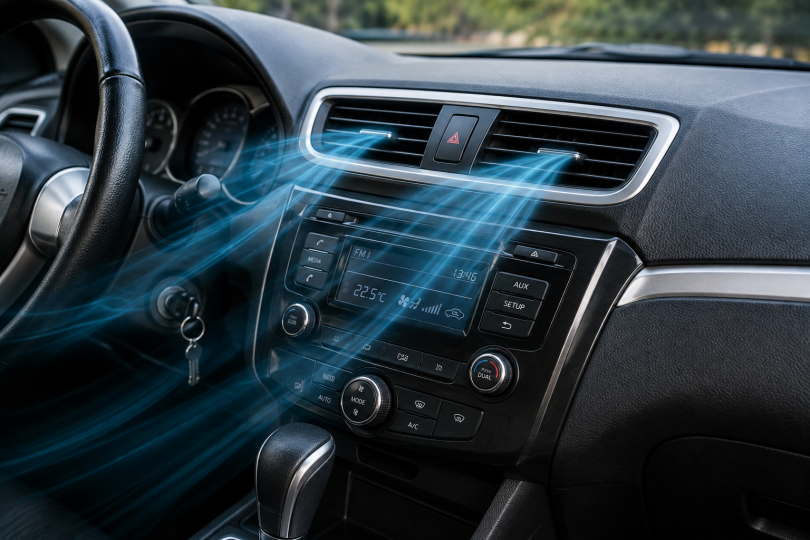

A vehicle’s air conditioning system does more than circulate cool air through the cabin. It relies on several connected components that manage refrigerant, pressure, airflow, temperature, and heat transfer. Each component has a specific job, and a problem in one area can affect the performance of the entire system.
Understanding vehicle air conditioning parts can make it easier to identify common AC problems, understand repair recommendations, and choose suitable replacement components. From the compressor that moves refrigerant through the system to the expansion device that controls refrigerant flow, every part contributes to cabin comfort.
How a Vehicle AC System Produces Cool Air
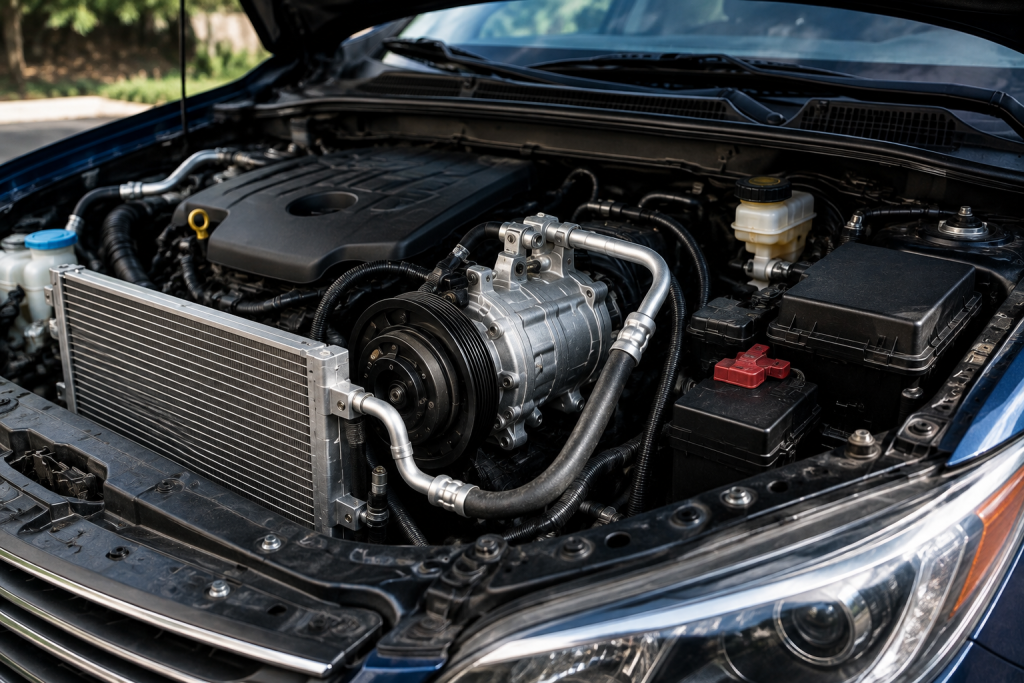
The cooling process begins with the compressor. It receives low-pressure refrigerant from the evaporator and compresses it into a high-pressure, high-temperature gas. The refrigerant then moves toward the condenser, where heat is released into the surrounding air.
After passing through the condenser, the refrigerant changes into a high-pressure liquid. It then travels through an expansion valve or another metering device. This component reduces the refrigerant’s pressure, causing its temperature to drop before the refrigerant enters the evaporator.
Inside the evaporator, the cold refrigerant absorbs heat from the air passing through the cabin air system. The blower motor pushes this cooled air through the vents, allowing the occupants to feel the cooling effect.
The refrigerant then returns to the compressor, and the cycle starts again.
Main Auto Aircon Parts and Their Functions
Several auto aircon parts work together during this cycle. The compressor is often described as the heart of the system because it keeps refrigerant moving between the high- and low-pressure sides.
The condenser is normally positioned near the front of the vehicle, where airflow can help remove heat from the refrigerant. Its condition can directly affect cooling performance, particularly when airflow is restricted by dirt, debris, or damage.
The evaporator sits inside the vehicle’s HVAC housing. It absorbs heat from cabin air while allowing moisture to condense on its surface. This is also why water may drain beneath a vehicle when the AC has been operating.
The expansion valve or orifice tube controls how much refrigerant enters the evaporator. Its operation must match the system’s refrigerant requirements and operating conditions.
Other components include the receiver-drier or accumulator, refrigerant lines, pressure switches or sensors, blower motor, cabin air filter, and various electrical controls.
Car Aircon Parts That Affect Cooling Performance
Different car aircon parts can influence how effectively the system cools the cabin. A weak blower motor, for example, may allow the evaporator to become cold while delivering insufficient airflow through the vents.
A blocked cabin filter can create a similar problem. Restricted airflow makes the AC feel weak even when the refrigerant circuit is functioning properly. Replacing a dirty filter can sometimes improve airflow without requiring major AC repairs.
Electrical components also deserve attention. Relays, fuses, switches, sensors, wiring, and climate-control modules help control compressor operation and blower speed. A fault in the electrical circuit can prevent the compressor from engaging or cause inconsistent operation.
Refrigerant leaks are another common concern. Low refrigerant levels reduce the system’s ability to absorb and release heat efficiently. Leaks may occur around hoses, fittings, seals, condenser connections, or other points in the refrigerant circuit.
Understanding Automotive Aircon Parts
The term automotive aircon parts covers a wide range of mechanical, electrical, and HVAC components used in vehicle cooling systems. These parts are not necessarily interchangeable across different vehicles.
Vehicle manufacturers may use different compressor designs, refrigerant types, pressure specifications, electrical connectors, mounting arrangements, and control systems. Even vehicles that appear similar can require different components.
For that reason, identification should be based on the vehicle’s make, model, year, engine configuration, and the original component’s specifications. Part numbers can provide another useful reference when selecting replacements.
Quality also matters because AC components operate under pressure and temperature changes. A replacement part should meet the required specifications rather than being selected solely because it appears physically similar to the original.
Auto AC Parts That May Require Inspection
Some auto AC parts experience greater wear or exposure over time. The compressor contains moving components and can develop problems involving bearings, seals, clutch assemblies, or internal mechanisms.
Hoses and seals can deteriorate with age, potentially allowing refrigerant to escape. Condensers may become damaged from road debris, while evaporators can develop leaks that are more difficult to locate because they are positioned inside the HVAC housing.
The blower motor and blower resistor can also develop faults. Symptoms may include reduced airflow, failure at certain fan speeds, or a blower that does not operate at all.
Pressure sensors and control valves may cause unusual AC behavior when their readings or operation fall outside the required range.
Signs That AC Components May Have a Problem
Changes in cooling performance are often the first indication that something needs attention. Warm air from the vents, weak airflow, unusual noises, or inconsistent cooling can all point toward different faults.
A compressor problem may produce grinding, rattling, or squealing sounds. A refrigerant leak can cause gradually weaker cooling, while a blocked filter can restrict airflow even when the refrigeration circuit remains operational.
Water dripping beneath the vehicle after using the AC is usually related to normal condensation drainage. However, unusual moisture inside the cabin may indicate a blocked drain or another HVAC problem.
Some issues are easier to diagnose through visual inspection, while others require pressure measurements, electrical testing, leak detection, or specialized AC service equipment.
Selecting Replacement Components
Choosing the correct vehicle air conditioning parts requires more than matching a component by appearance. Check the vehicle identification information, original part number, refrigerant specification, connector type, mounting points, and system requirements.
For major components such as compressors, condensers, evaporators, and expansion devices, compatibility is especially important. Installing an unsuitable component can lead to poor cooling or additional system problems.
Professional diagnosis can also prevent unnecessary replacement. A weak AC system does not automatically mean the compressor has failed. The actual cause could be a leak, restricted airflow, electrical fault, damaged condenser, faulty sensor, or another component.
Regular inspections and timely maintenance can help identify smaller problems before they affect other parts of the system. Keeping the condenser area clean, replacing the cabin filter at appropriate intervals, checking airflow, and addressing unusual noises or cooling changes can help maintain reliable AC performance.
A vehicle AC system is made up of many interconnected components, and each one contributes to the final cooling result. Knowing what these components do provides a clearer understanding of maintenance, diagnosis, and replacement decisions. When a problem occurs, identifying the faulty component rather than replacing parts at random can save both time and unnecessary expense.