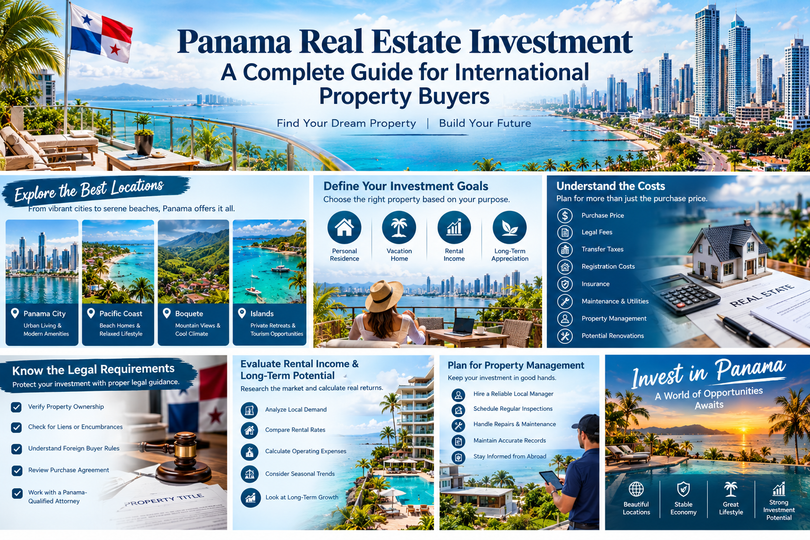

Panama has become an appealing destination for international property buyers interested in residential homes, coastal retreats, and potential long-term investment opportunities. Located between Central and South America, the country combines modern urban development, tropical landscapes, international business connections, and access to both the Pacific Ocean and the Caribbean Sea. These features make it worth exploring for buyers seeking a property that matches their financial goals and lifestyle preferences.
However, purchasing real estate in another country requires careful planning and a clear understanding of the local market. Successful Panama Real Estate Investment begins with researching suitable locations, comparing property prices, understanding ownership requirements, and calculating the total cost of purchasing and maintaining a property.
Why International Buyers Consider Panama
Panama attracts international attention for several reasons. Its capital, Panama City, features modern residential towers, commercial districts, shopping centers, restaurants, and healthcare facilities. The country also offers coastal communities, mountain towns, and suburban neighborhoods for buyers who prefer a quieter environment.
Panama uses the US dollar alongside the balboa, which is maintained at parity with the US dollar. This monetary arrangement can simplify certain transactions for buyers who already hold US dollars, although other currencies may still introduce exchange-rate costs.
The country’s international connections and varied property markets also appeal to people considering relocation, retirement, vacation homes, or rental properties.
Nevertheless, every investment should be evaluated individually. Economic conditions, property supply, local demand, and maintenance expenses can influence financial outcomes. Buyers should avoid assuming that every location will experience rising property values or deliver reliable rental income.
Explore Different Real Estate Locations
Choosing the right location is one of the most important steps in purchasing property in Panama. Each region offers a different combination of amenities, property types, and lifestyle opportunities.
Panama City
Panama City is suitable for buyers who value urban convenience and access to business districts. The market includes condominiums, luxury apartments, established residential neighborhoods, and properties close to commercial centers.
Buyers should compare building quality, monthly homeowners’ association fees, parking, transportation, and nearby services before selecting an apartment.
Pacific Coast Communities
Areas such as Coronado attract buyers interested in beach communities and residential developments outside the capital. These locations may appeal to retirees, vacation-home owners, and people seeking a more relaxed lifestyle.
Before purchasing, investigate road access, healthcare facilities, utilities, insurance availability, and the practical distance from essential services.
Mountain Communities
Some buyers prefer Panama’s cooler mountain environments. Locations such as Boquete offer a different lifestyle from the capital and coastal areas, with scenic surroundings and residential properties suited to various preferences.
Climate, local infrastructure, property maintenance, and access to healthcare should all be considered when comparing mountain homes.
A successful Panama Real Estate Investment strategy begins by matching the location to the intended use of the property rather than choosing solely on appearance or advertised price.
Understand Your Investment Objectives
Before viewing properties, international buyers should establish clear objectives. Some want a permanent residence, while others seek a vacation home, a rental property, or a long-term asset.
Each objective requires a different evaluation process. Buyers purchasing a personal residence may prioritize comfort, transportation, and nearby amenities. Rental investors should examine local demand, competing properties, occupancy patterns, and realistic rental rates.
It is also important to consider the expected holding period. Real estate is generally less liquid than cash or publicly traded investments, and selling a property may take time. Buyers should avoid investing money they might need for immediate expenses.
A defined budget and clear objectives make it easier to compare properties and identify options that suit individual circumstances.
Calculate the Total Cost of Ownership
The advertised purchase price is only one part of the financial commitment. International buyers should prepare a complete budget covering transaction costs and ongoing expenses.
Depending on the property and transaction, additional costs may include legal fees, applicable transfer taxes, registration expenses, inspections, insurance, renovations, utilities, and maintenance.
Condominium buyers should carefully review monthly association fees and the building’s financial condition. Special assessments for major repairs can create additional expenses, particularly in older buildings.
Buyers should also investigate property taxes and any tax implications associated with rental income or future resale. An independent local attorney and qualified tax professional can explain the rules that apply to the specific transaction.
For overseas owners, property management expenses may also be necessary. Planning for these costs before making an offer helps create a more realistic financial picture.
Understand Legal Requirements for Foreign Buyers
Foreign nationals can generally purchase many types of property in Panama, but the legal status of each property must be verified before a transaction proceeds.
Buyers should hire an independent Panama-qualified attorney to review title records, confirm ownership, investigate potential liens, and explain the purchase agreement. Legal advice is particularly important when buying land, properties with unusual ownership structures, or real estate in specially regulated areas.
Certain coastal, border, and other designated locations may involve restrictions or additional requirements. Some properties may also have arrangements that differ from conventional registered title ownership.
For this reason, buyers should never assume that every property offers the same legal protections. They should verify the ownership structure, boundaries, legal access, and permitted uses before transferring funds or signing binding agreements.
A real estate agent can help identify properties and coordinate viewings, but independent legal representation is essential for protecting the buyer’s interests.
Evaluate Rental Income and Long-Term Potential
Investors considering rental properties should research local demand rather than relying on broad claims about tourism or economic growth.
In Panama City, rental demand may be influenced by employment centers, business activity, transportation, and access to services. Coastal properties may attract vacationers, but occupancy can vary by season and location. Mountain homes may appeal to different tenant groups and require a separate market assessment.
Calculate potential income after accounting for management fees, repairs, insurance, utilities, taxes, marketing, and vacant periods. Compare similar properties and use conservative assumptions when estimating returns.
Long-term appreciation is also uncertain. Infrastructure improvements, neighborhood development, construction quality, and changing market conditions can influence property values, but none guarantees a profit.
Careful research helps buyers determine whether a particular property supports their financial objectives.
Property Management and Ongoing Maintenance
International ownership requires a plan for looking after the property when the owner is away. A reliable local property manager may coordinate repairs, collect rent, communicate with tenants, and arrange inspections.
Buyers should investigate a property’s physical condition before purchasing. Roofing, plumbing, electrical systems, air conditioning, drainage, and signs of moisture damage deserve attention.
Panama’s tropical climate makes preventive maintenance particularly important. Properties near the coast may experience additional wear from humidity and salt exposure, while homes in other regions may have different maintenance requirements.
Clear management agreements and accurate expense records help owners maintain oversight of their investment.
Making an Informed Property Investment Decision
Panama offers international buyers a diverse real estate market, ranging from urban condominiums to coastal homes and mountain residences. Finding the right property requires balancing location, legal security, affordability, and long-term objectives.
A well-planned Panama Real Estate Investment approach includes thorough market research, a realistic budget, independent legal checks, and a clear understanding of ongoing ownership responsibilities.
Whether purchasing a home for personal use or evaluating a potential rental property, buyers should verify important details and seek qualified professional advice before committing funds. With careful preparation and realistic expectations, international buyers can explore Panama’s property market more confidently and identify opportunities that align with their individual needs and financial plans.