A hospital room, a night shift, a grandparent three time zones away — for as long as services have existed, some of the people who most wanted to be there could not be. What changed in the last few years is that the barrier quietly fell. Livestreaming religious services turned a phone or a laptop into a seat in the congregation, and what began as an emergency measure has become a permanent part of how many faith communities worship.
This site has explored how AI prayer apps support personal devotion; livestreaming is the communal counterpart — the same technology impulse, pointed at the shared service instead of the private prayer.
What a Basic Setup Actually Looks Like
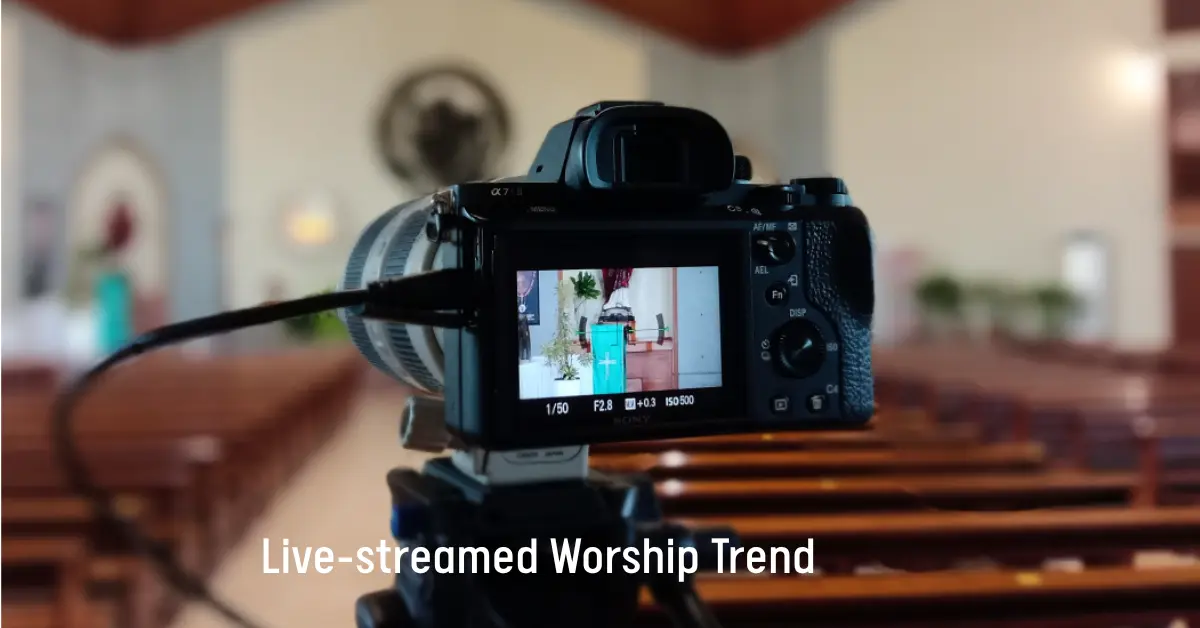
The entry point is simpler than most congregations expect. A single smartphone on a tripod, placed where it can see the speaker and hear the room, is enough to start. The stream runs through the platform the community already uses — a video platform’s live feature or a social page — and the link is shared through the channels members already check.
The first upgrade that matters is audio, not video. Viewers forgive a soft picture; they leave over echoing, muffled sound. A modest microphone near the speaker, or a feed from the building’s existing sound system, improves the experience more than any camera. Lighting comes next — a bright window behind the speaker turns them into a silhouette — and only then does a second camera angle add anything. Congregations that stream well for years usually run on this unglamorous order of priorities.
What It Costs, Honestly
The honest answer is: anywhere from almost nothing to a professional production, and both ends are legitimate. The phone-and-tripod setup costs the price of the tripod. A mid-range arrangement — a dedicated camera, a small audio mixer, a streaming encoder and a volunteer who learns the software — lands in the range of a few hundred to a couple of thousand in most currencies. Large venues with multiple cameras and paid operators spend far more, but they are producing television, not access.
The recurring cost people forget is the human one. Someone must start the stream, watch the comments, fix the inevitable frozen frame, and post the recording afterwards. Successful streaming ministries treat that role as a real ministry position with a rota, not a favour asked of whoever arrives first.
Keeping It Personal at a Distance
The fear every community names is that a stream turns worshippers into an audience. The congregations that avoid it design participation in: a host in the chat who greets people by name, prayer requests gathered online and read with the ones from the room, readings and responses shown on screen so remote members can join aloud at home. Some communities keep a short online gathering after the service — the digital equivalent of coffee in the hall — because fellowship, not content, is what people actually miss.
There is a theological honesty to maintain as well. A stream can carry words, music and teaching anywhere; traditions differ on which parts of their worship they believe can be mediated by a screen at all, and the thoughtful communities say so openly rather than pretending the question away. Technology widens the door; each tradition decides what happens at the threshold. The same discernment applies to money, where blockchain donations and simple online giving now sit side by side in many congregations’ toolkits.
The People It Serves Best
Ask streaming coordinators who watches, and the list is consistent: the elderly and unwell, members who moved away but never really left, shift workers and carers, travellers, and the quietly curious who would never walk through a physical door first but will watch three Sundays from their sofa. For several of those groups the stream is not a lesser substitute — it is the only connection that exists, and it keeps them on the community’s prayer lists, mailing lists and minds.
It also serves the community in reverse: services become an archive. Sermons can be revisited, shared with a friend in a hard week, or captioned and translated for members the original language would have excluded. Accessibility features — captions for the hard of hearing above all — turn out to help far more people than the group they were added for.
Common Problems, and the Simple Fixes
Nearly every streaming congregation hits the same four problems, and all four have boring solutions. The stream freezes or drops: that is almost always the building’s upload speed, not the platform — test it during a busy service, not on a quiet weekday, and lower the streaming quality a notch if the connection is thin; a stable standard-definition stream beats a beautiful one that buffers. The sound echoes: the microphone is hearing the room’s speakers as well as the speaker, so move it closer to the person and further from the loudspeakers. Nobody watches: usually the link is hard to find — put it in the same place every week, at the same time, and say the time in the community’s own announcements rather than assuming people will search for it.
The fourth problem is rights. Music performed in a service and then streamed or kept as a recording can need licences the in-person service did not, and the rules differ by country and by what the recording is used for. It is the least exciting item on this page and the one most worth an hour of checking before the first stream, not after the first complaint.
The Bottom Line
Livestreaming religious services works because it answers a real absence, not because the technology is impressive. Start with a phone and good audio, staff it like a ministry, design participation instead of spectatorship, keep the setup simple enough that a new volunteer can run it after one Sunday of shadowing, and the stream becomes what it should be: not a broadcast of the congregation, but an extension of it, reaching the hospital room and the night shift with the same service everyone else attended.