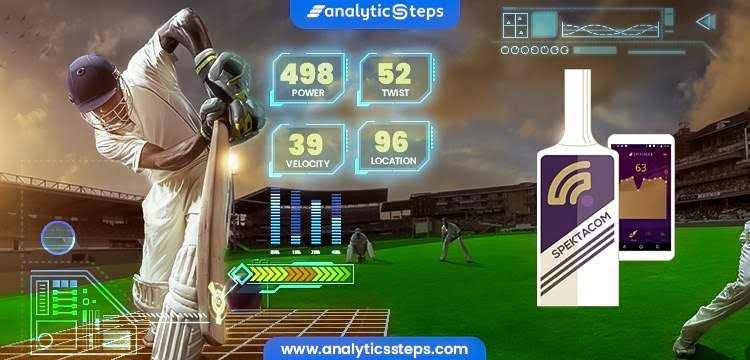

Digital sports platforms have evolved beyond simple score tracking and post-match summary reports. Today, real-time sports interfaces process thousands of telemetry events per minute, converting pitch actions, player statistics, and ball-by-ball outcomes into instant analytical updates for millions of concurrent users. In sports like cricket—where match dynamics shift rapidly across distinct formats such as Twenty20, One Day Internationals, and multi-day Test matches—maintaining continuous data synchronization requires specialized architectural design.
Building a backend system capable of handling high-volume live match updates involves balancing throughput, statistical precision, and sub-second transmission speeds. Engineering teams must design pipelines that ingest raw telemetry from stadium sensors or official provider APIs, transform raw data into calculated statistical matrices, and broadcast state changes to active web and mobile interfaces without degradation during traffic spikes.
Data Transmission Protocols and Latency Reduction in Live Sports Markets
Traditional HTTP polling architectures are insufficient for contemporary sports media applications due to the overhead of repeated request headers and response delays. Modern live sports systems rely instead on persistent full-duplex communication channels, predominantly WebSocket connections backed by Server-Sent Events (SSE) for unidirectionally streaming telemetry to client browsers. By maintaining open TCP sockets between edge servers and client devices, platforms can push state changes immediately upon event verification rather than waiting for scheduled client queries.
When processing high-frequency sporting events such as Twenty20 leagues or international Test series, platforms must handle thousands of concurrent state changes per second. For example, during high-stakes overs, real-time score updates and fluctuating probability models drive the dynamic odds displayed across dedicated platforms; interfaces like desi live betting on cricket games depend on low-latency WebSockets and event-driven API feeds to reflect ball-by-ball occurrences, such as wickets or boundaries, without introducing pricing lag or telemetry discrepancies for active viewers.
To maintain minimal latency across geographically dispersed user bases, architecture teams utilize edge caching nodes and content delivery networks (CDNs) optimized for streaming dynamic payloads. Ingest nodes receive primary data streams from official data hubs, process the incoming JSON or Protocol Buffers payloads, and route them through message brokers like Apache Kafka. These streams are then ingested by distributed memory databases, such as Redis clusters, before being distributed to client connections through localized edge gateways, minimizing round-trip time across regional mobile networks.
Algorithmic Pricing Engines and Automated Market Suspension Rules
Behind the visual interface of live sports platforms sit specialized calculation engines responsible for computing real-time situational probabilities. In cricket, statistical models must evaluate multiple variables simultaneously, including current run rates, required run rates, partnership history, bowler statistics, pitch wear, atmospheric conditions, and Duckworth-Lewis-Stern (DLS) par calculations during weather interruptions.
Automated pricing engines process these variables using predictive algorithms that recalibrate probabilities after every single ball delivered. To prevent exposure during volatile match events—such as boundary reviews, Decision Review System (DRS) appeals, or unexpected injuries—systems implement automated market suspension routines. These safety triggers temporarily lock market interactions until the official stadium signal confirms the ruling, protecting system integrity against delayed latency arbitrage.
Key Infrastructure Layers in Live Cricket Data Processing
| Telemetry Component | Operational Function | Primary Technical Requirement | Key Performance Metric |
|---|---|---|---|
| Ingestion Gateway | Parses raw event payloads from stadium feeds | High-throughput API handling | Ingestion delay (< 50ms) |
| Streaming Broker | Routes event streams across analytical microservices | Distributed partition support | Zero message loss during spikes |
| In-Memory Cache | Stores active match states and running statistics | Sub-millisecond read/write access | Cache hit ratio (> 99.5%) |
| Edge Socket Gateway | Pushes live updates directly to active user interfaces | Persistent WebSocket management | Concurrent connection capacity |
Client-Side Rendering and State Management Under Constrained Bandwidth
While backend performance is critical, client-side rendering architecture dictates how effectively users consume real-time information. Mobile devices connected to cellular networks often experience fluctuating signal strength, high packet loss, or latency jitter, which can disrupt live telemetry feeds if not handled gracefully by the front-end application layer.
Single-Page Applications (SPAs) built with modern JavaScript frameworks manage client-side state by applying targeted updates to the document object model rather than re-rendering entire interface views. To optimize data transfer over low-bandwidth mobile connections, engineering teams implement delta updates—transmitting only the specific numerical or textual fields that changed during a given ball (such as run tally, bowler figures, or over progress) rather than sending full state snapshots.
To handle temporary connectivity interruptions, front-end engines implement local state queues and exponential backoff reconnection algorithms. When a network drop occurs, the client interface displays the last verified state alongside a sync status indicator, attempting reconnection in background threads without freezing the user interface or forcing a hard page refresh.
Technical Checklist for Live Sports Telemetry Systems
- Payload Compression: Utilizing binary serialization formats like Protocol Buffers or FlatBuffers instead of verbose JSON payloads for WebSocket messages to reduce bandwidth overhead.
- Fallback Mechanisms: Implementing automatic HTTP/2 Server-Sent Events or long-polling fallbacks when WebSocket connections are blocked by strict enterprise firewalls or mobile proxy networks.
- Client-Side Deduplication: Enforcing strict sequence numbering on event messages so front-end applications ignore duplicate or out-of-order packets during rapid network reconnections.
- Rate-Limiting & Throttling: Applying intelligent UI throttle buffers to batch high-frequency visual adjustments into smooth animation updates without overloading browser thread execution.
Architectural Requirements for High-Availability Sports Platforms
Delivering stable, real-time sports tracking and live analytics demands a comprehensive approach to system architecture, combining resilient ingest pipelines, low-latency distribution networks, and defensive client-side rendering strategies. As digital sports audiences continue to demand instant, ball-by-ball visibility into active matches, platform operators must prioritize infrastructure scalability and low-latency data pipelines over legacy server architectures.
By leveraging distributed streaming brokers, in-memory caching systems, persistent WebSocket gateways, and optimized delta updates, modern platforms can successfully manage high-concurrency traffic during major international cricket tournaments while preserving data fidelity and interface responsiveness across diverse network conditions.