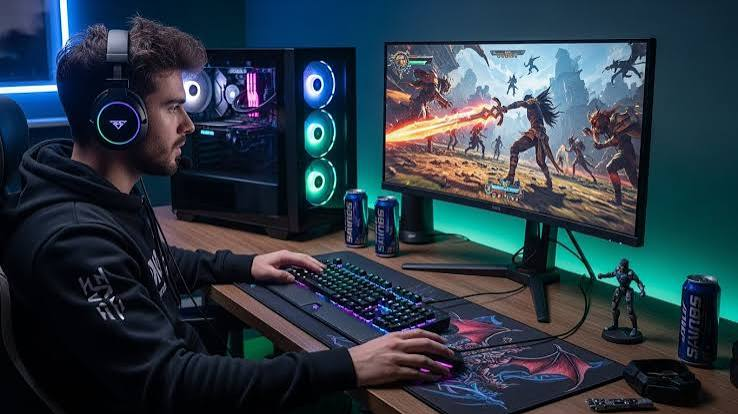

Entertainment has always followed the way people live. When television became common, families gathered around the screen. When smartphones arrived, entertainment moved into our pockets. Today, gaming has taken another major step forward. What was once a simple pastime has become a global form of entertainment, social connection, and creative expression.
The journey of the alternatif big777 is especially fascinating. It shows how quickly technology can change the way people play, communicate, and spend their free time. From basic multiplayer experiences to enormous digital worlds, gaming has developed into something much bigger than anyone expected.
The Early Days of Online Game Entertainment
Think back to the early days of the internet. Connections were slow, graphics were simple, and loading a webpage could feel like a small adventure. Yet even with those limitations, people were excited about playing together online.
Early multiplayer games introduced a completely different feeling. Instead of competing against a computer, players could face real people from different places. A teenager sitting in a bedroom could suddenly challenge someone hundreds of miles away. That sense of connection was powerful.
Games were not always visually impressive during this period. Some had basic interfaces and limited features. Still, players returned because the experience felt personal. Winning against another human being created excitement that traditional single-player games could not always provide.
How Technology Changed the Online Game
As internet speeds improved, gaming changed dramatically. Developers could create larger maps, better graphics, richer stories, and more complicated multiplayer systems.
Broadband connections removed many of the frustrations associated with slow internet. Players could join matches more quickly and communicate with teammates in real time. Consoles and personal computers became connected entertainment platforms rather than isolated machines.
Then came smartphones.
Suddenly, gaming was no longer limited to a desk or television. People could play while traveling, waiting for an appointment, or relaxing at home. Mobile gaming opened the door to millions of new players who might never have considered themselves traditional gamers.
This shift also changed game design. Developers began creating experiences that could be enjoyed in short sessions. A person might play for five minutes during a lunch break or spend an entire evening exploring a virtual world.
Online Game Communities Became Social Spaces
Perhaps the biggest change has been social interaction.
Gaming used to be something people often did alone. Today, many games function almost like digital meeting places. Friends can talk through voice chat, form teams, share strategies, and celebrate victories together.
Consider a group of friends who live in different cities. They may not have time to meet every weekend. Yet they can still gather online after work, choose a game, and spend hours laughing together. The game becomes less important than the shared experience.
Communities have also developed around particular games. Players exchange tips, create videos, organize tournaments, and discuss updates. Some friendships begin through a simple match and continue for years.
So, is gaming really just about winning? Not anymore. For many people, it is also about belonging.
Streaming and Esports Added a New Dimension
Another major development came from game streaming and esports. Watching someone play is now entertainment in its own right.
Streamers have built large audiences by combining gameplay with humor, commentary, and personality. Viewers may tune in because they enjoy a particular creator rather than the game itself. This has created new careers and business opportunities within the gaming industry.
Esports has pushed the idea even further. Competitive players can now compete in organized tournaments watched by audiences around the world. Professional teams train seriously, while fans follow their favorite players much like traditional sports supporters follow athletes.
This transformation proves that digital gaming is no longer a small corner of entertainment. It has become part of mainstream culture.
Personalization Makes Gaming More Engaging
Modern games also understand players better. Custom characters, adjustable difficulty, seasonal events, and personalized rewards give users more control over their experiences.
For example, one player might enjoy competitive matches, while another prefers exploring a peaceful virtual world. Both can find an experience that fits their personality.
Storytelling has improved as well. Many modern games feature emotional characters, unexpected choices, and detailed environments. Players are not simply watching a story unfold. They are often helping shape it.
That level of involvement creates a unique emotional connection. A difficult decision inside a game can feel surprisingly meaningful because the player made it personally.
What Comes Next?
The future of gaming looks even more connected. Faster networks, cloud technology, virtual reality, and improved devices could make digital worlds increasingly accessible.
Imagine starting a game on one device and continuing it somewhere else without losing progress. Imagine entering a virtual environment where conversations, competition, and exploration feel almost natural. These ideas are already becoming part of modern gaming.
Of course, the industry still faces challenges. Players need healthy screen-time habits, safe online communities, and responsible approaches to spending. Developers also have to balance innovation with the well-being of their audiences.
The goal should not simply be to make games more addictive. It should be to make them more enjoyable, creative, social, and meaningful.
A New Era of Digital Entertainment
The evolution of the main big777 reflects the evolution of technology itself. What started with simple multiplayer experiences has grown into a massive entertainment ecosystem filled with communities, competitions, stories, and opportunities.
More importantly, gaming has changed how people connect. A screen may separate two players physically, but shared experiences can bring them surprisingly close.
The next chapter is still being written. New technology will undoubtedly introduce fresh ideas and unexpected ways to play. For anyone who enjoys digital entertainment, that is an exciting thought.
Whether you are a longtime player or someone discovering gaming for the first time, there has never been a more interesting moment to explore the digital worlds waiting on the other side of the screen.