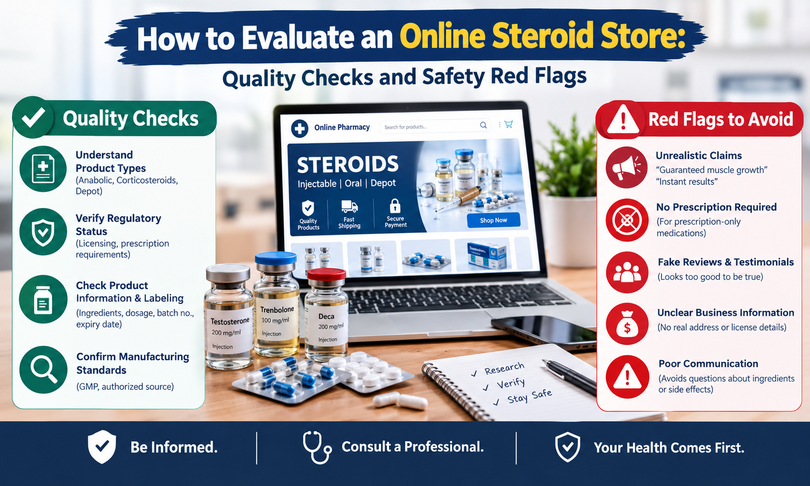

The growing availability of pharmaceutical products on the internet has made it easier for consumers to research medications, compare product information, and explore different healthcare options. However, shopping online also creates challenges, particularly when products involve prescription medications or substances associated with significant health risks. Anyone researching steroids online should understand how to recognize unreliable sellers, identify misleading marketing claims, and verify whether a product comes from an authorized source.
An online steroid store may advertise injectable formulations, oral medications, and products marketed toward bodybuilding enthusiasts. Yet professional website design, attractive packaging, and positive customer reviews do not necessarily demonstrate product authenticity or safety.
Before considering a steroids purchase, consumers should understand the importance of regulatory approval, prescription requirements, manufacturing standards, and professional medical guidance. This article explains the major quality checks to consider, common warning signs to avoid, and practical ways to make informed decisions when researching steroid-related products.
1. Understand the Different Types of Steroids
The first step in evaluating an online steroid store is understanding what type of product it advertises. The word “steroids” describes different categories of substances with distinct medical applications and risk profiles.
Anabolic-androgenic steroids act on androgen receptors and influence muscle development and other biological processes. Testosterone is one example. Certain anabolic steroids have legitimate medical applications, but nonmedical use can lead to serious complications.
Corticosteroids are used to manage specific inflammatory, allergic, and immune-related conditions. Depending on the medication, they may be available as tablets, creams, inhalers, or injections.
A Steroid depot generally refers to a formulation designed to release medication gradually after administration. Some depot formulations are prescribed for particular medical conditions and require appropriate monitoring.
These categories should not be treated as interchangeable. Understanding the active ingredient, intended medical use, and associated risks helps consumers identify misleading descriptions and avoid confusing products with substantially different purposes.
2. Verify the Seller’s Regulatory Status
One of the most important quality checks is determining whether an online pharmacy or medication supplier is legally authorized to operate.
Legitimate online pharmacies should provide clear information about their business identity, licensing status, and applicable prescription requirements. Consumers should independently verify this information through the relevant national medicines regulator or pharmacy licensing authority.
Be cautious when a website claims to ship prescription-only medications without requiring a prescription where one is legally necessary. Unrestricted access to prescription medicines can indicate that the seller is operating outside established safeguards.
International shipping also deserves attention. A product being available on a foreign website does not automatically mean that importing it is legal in the buyer’s country.
Before making a decision, review local regulations and consult a licensed pharmacist if the legal status is unclear. Regulatory compliance provides an important layer of consumer protection, although it does not eliminate every possible risk.
3. Examine Product Information and Labeling
Reliable medication information should identify the active ingredient, strength, dosage form, manufacturer, and relevant warnings. Packaging may also contain batch numbers, expiration dates, and storage instructions.
When researching steroids online, consumers should compare the information provided by a seller with official product documentation from the manufacturer or medicines regulator.
Watch for inconsistent ingredient names, contradictory strength information, unexplained spelling errors, or descriptions that make broad medical claims without supporting evidence.
However, even accurate-looking labeling cannot prove that a product is genuine. Counterfeit medicines may imitate legitimate packaging and reproduce manufacturer details.
For this reason, consumers should not rely exclusively on product photographs or seller-provided certificates. Where authenticity is uncertain, the safest option is to consult a licensed pharmacist or obtain medication through an authorized pharmacy.
4. Recognize Misleading Marketing Claims
Unreliable websites often use aggressive marketing to encourage quick purchasing decisions. Common examples include guaranteed muscle growth, immediate results, completely risk-free injections, and claims that a product has no side effects.
Such statements should be treated skeptically.
The effects of steroid medications vary according to the substance, medical indication, individual health, and treatment circumstances. No website can responsibly guarantee identical outcomes for every person.
Be especially cautious when a seller:
- Promises rapid physical transformation without meaningful risks.
- Claims that medical supervision is unnecessary.
- Encourages customers to ignore prescription requirements.
- Recommends increasing exposure to accelerate results.
- Uses testimonials instead of credible medical evidence.
- Discourages questions about ingredients or potential adverse effects.
These warning signs suggest that a website may prioritize sales over consumer safety.
A trustworthy healthcare provider should explain both the potential benefits and the limitations of a treatment rather than presenting every product as a guaranteed solution.
5. Evaluate Website Transparency and Customer Support
Website transparency is another important consideration when assessing an online medication supplier.
Look for clearly stated business details, accessible customer support, transparent policies, and accurate information about the company’s regulatory status. The seller should explain how prescription verification works when applicable and how customers can contact a qualified professional about medication questions.
Be cautious when a website provides no verifiable business identity, uses inconsistent contact information, or communicates exclusively through anonymous messaging accounts.
A secure connection and a professional-looking checkout page are useful basic features, but neither establishes that a pharmacy is legitimate.
Similarly, customer reviews should not be treated as definitive proof of product quality. Reviews can be fabricated, selectively published, or written by people who cannot verify a medication’s ingredients.
The most reliable approach is to prioritize independent regulatory verification and professional healthcare advice over promotional material.
6. Understand the Health Risks Before a Steroids Purchase
A responsible steroids purchase decision requires an understanding of the potential health consequences associated with the intended medication.
Anabolic-androgenic steroid misuse can suppress natural testosterone production, impair fertility, and cause acne, hair loss, or changes in mood. It may also contribute to elevated blood pressure, unfavorable cholesterol levels, cardiovascular complications, and liver injury, depending on the substance and pattern of use.
Women may experience menstrual disturbances, increased facial hair, voice deepening, and other changes that can be irreversible.
Adolescents face additional concerns because anabolic steroid exposure may interfere with normal growth and development.
Corticosteroids have different risks, which may include elevated blood glucose, reduced immune function, and effects on bone health. The likelihood of these complications depends on the particular medication, dose, duration, and route of administration.
Depot formulations deserve particular attention because their effects may continue after administration. An adverse reaction cannot necessarily be reversed simply by deciding not to take another dose.
Anyone experiencing severe symptoms after using a medication, including chest pain, difficulty breathing, fainting, or a serious allergic reaction, should seek urgent medical attention.
7. Check Storage Requirements and Product Handling
Medication quality can be affected by inappropriate storage, transportation, or handling. Some products require specific temperature conditions or protection from light, while others have different storage requirements.
Consumers should review official storage instructions rather than assuming that all injectable or oral steroid products can be stored in the same way.
Be wary of sellers who cannot explain basic product-handling requirements or who make unsupported claims about indefinite shelf life.
A product that has been exposed to unsuitable conditions may not retain its expected quality. Nevertheless, visual inspection alone cannot establish whether a medicine has been contaminated or degraded.
If there are concerns about packaging integrity, storage history, or authenticity, consult a pharmacist before using the medication.
8. Prefer Professional Guidance Over Online Recommendations
Online forums and bodybuilding communities can provide personal experiences, but individual accounts are not substitutes for medical evidence.
A medication that appears tolerable to one person may be inappropriate for someone with a different medical history, underlying condition, or medication regimen.
Before using prescription steroid medication, consult a qualified healthcare professional who can assess whether treatment is medically necessary and explain appropriate monitoring.
Depending on the product, monitoring may involve blood pressure measurements, blood tests, hormone assessments, or other investigations.
People considering anabolic steroids for physical performance should also understand that nonmedical use can create long-term health risks, even when the product is authentic.
If symptoms such as fatigue, reduced strength, or low libido are motivating interest in steroid treatment, a proper medical evaluation can help identify the underlying cause rather than relying on self-diagnosis.
Conclusion
Evaluating an online steroid store requires more than comparing prices, reading reviews, or examining product photographs. Consumers should verify the seller’s regulatory status, examine product information carefully, recognize misleading claims, and understand the potential health consequences of steroid use.
Researching steroids online can expose consumers to counterfeit products and sellers that operate without appropriate safeguards. Understanding the purpose and risks of a Steroid depot formulation is equally important because its effects may continue after administration.
Before making a steroids purchase, verify applicable prescription requirements, consult a qualified healthcare professional, and obtain prescription medications through authorized channels.
Ultimately, the best approach is to prioritize reliable medical information, regulatory compliance, and long-term health over aggressive marketing promises. Careful research cannot eliminate every risk, but it can help consumers recognize warning signs and make more informed healthcare decisions.